What we make it from
Four materials that age well. We say plainly where they come from, how they change over the years and how to look after them, so they outlast us.
Wood
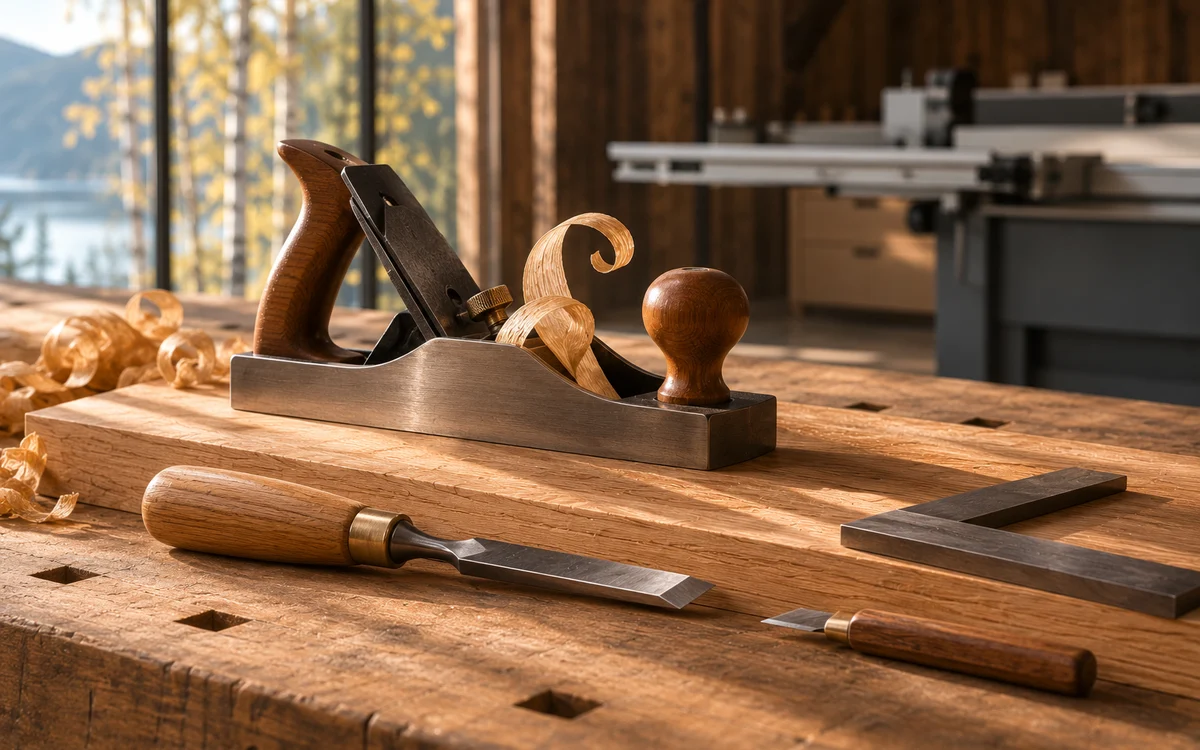
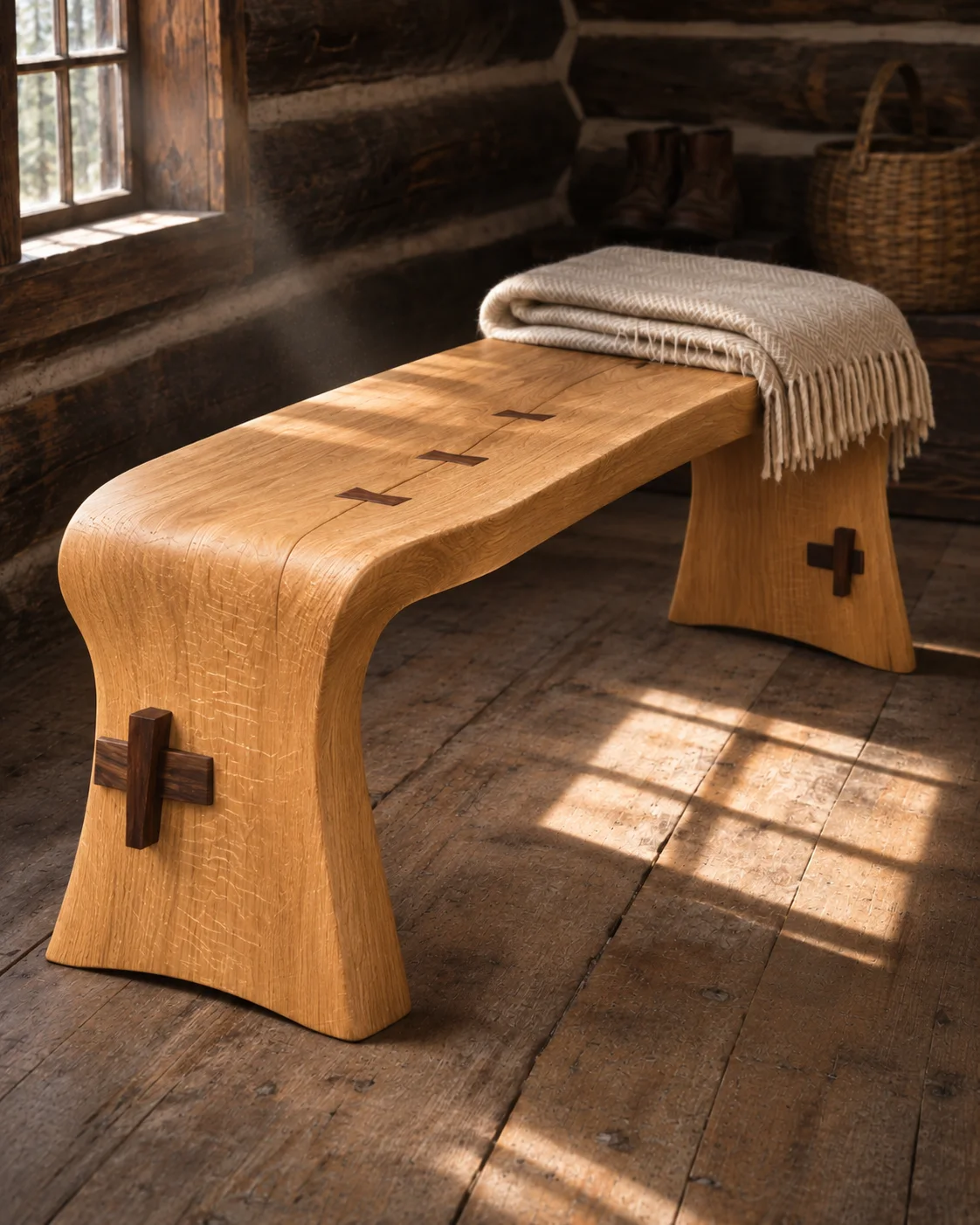
Oak, smoked ash, walnut
Oak, ash and walnut from sawmills we know, dried slowly for two years. We finish it with hardwax oil, not lacquer, so the wood breathes and you can refresh it at home.
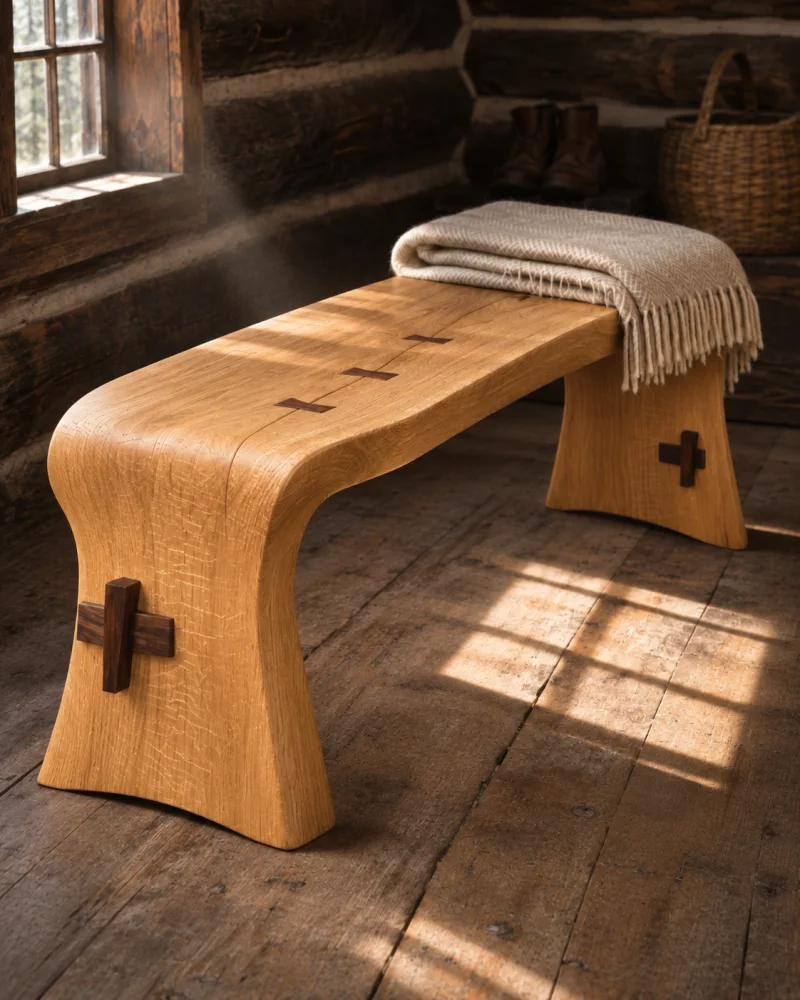 Natural oakLight and honey-toned, with a clear grain. Over the years it deepens to a warm gold.
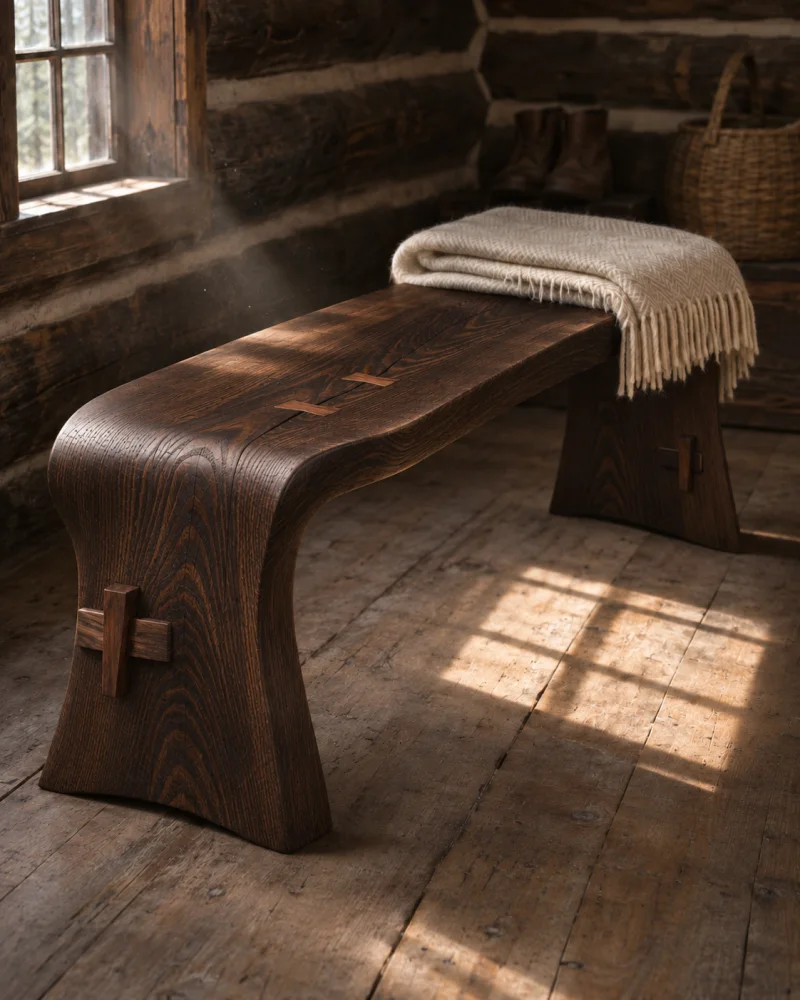 Smoked ashFumed with ammonia to the colour of dark chocolate. Calm and deep, with the grain still showing.
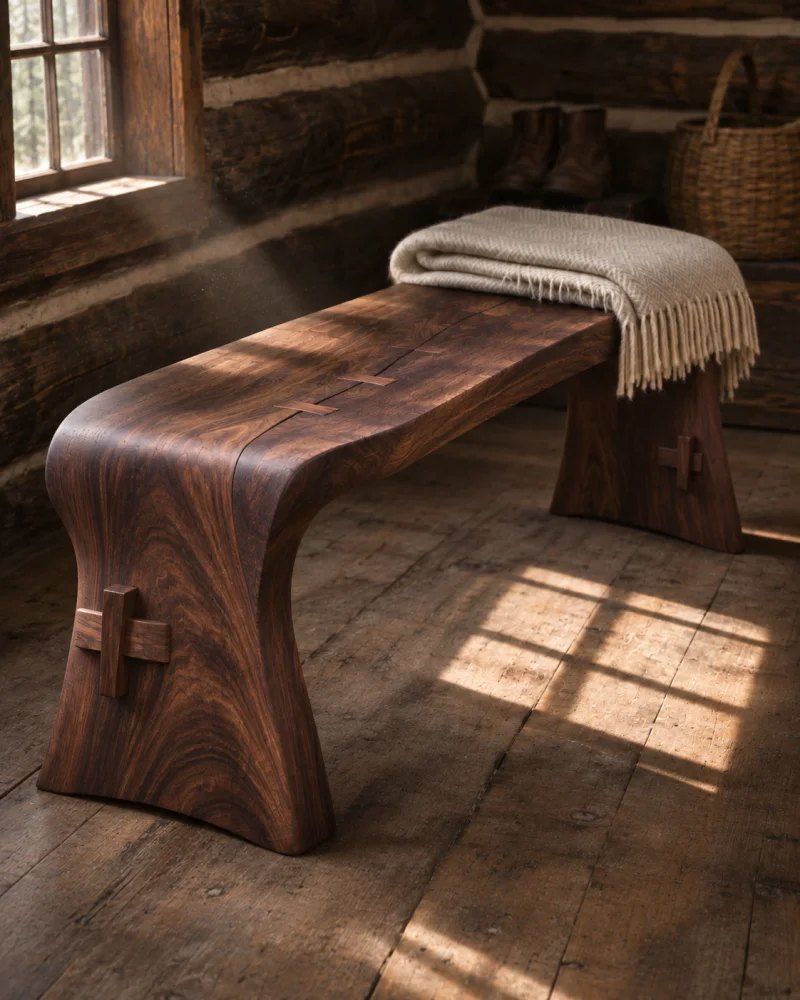 WalnutDark brown with hints of purple and grey. The rarest of our woods, and every board is different.
- Where it comes from
- We buy whole logs and dry the boards ourselves, first under an open shed, then in the kiln. No board or veneer: every part of the furniture is solid wood.
- How it ages
- Oak deepens to a warm gold over the years, smoked ash stays deep and calm, walnut lightens a little. Scratches and marks of use can be sanded out.
- Care
- Wipe with a damp, well wrung-out cloth. Once a year, apply a thin coat of hardwax oil; rub out water marks with fine sandpaper.
Linen
Cushion covers, lampshades
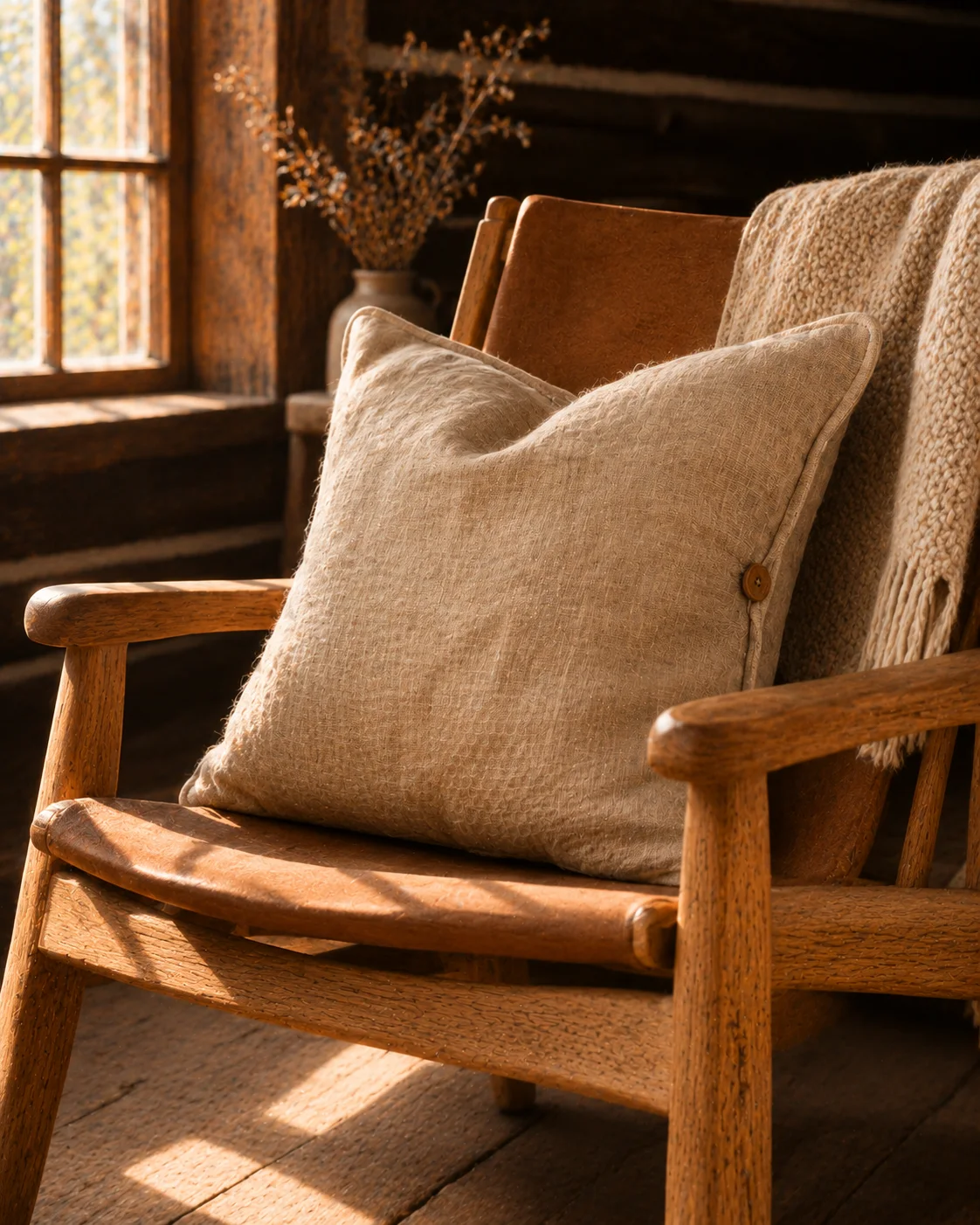
Heavy linen, washed before sewing so it won’t shrink. It is soft from the first day and gets softer with every wash.
- LinenUndyed linen lets through a warm, honeyed light.
- GraphiteGraphite-dyed linen sends the light down onto the table.
- Where it comes from
- We buy linen by the bolt, wash it before cutting and sew it here. We only dye the colours we can get from plants.
- How it ages
- It softens and turns matt with every wash, and the plant-dyed colours mellow like a curtain faded by the sun.
- Care
- Wash at 40°C without bleach and dry on the line. Linen looks best slightly creased; there’s no need to iron it.
Wool and felt
Blankets, rugs, baskets
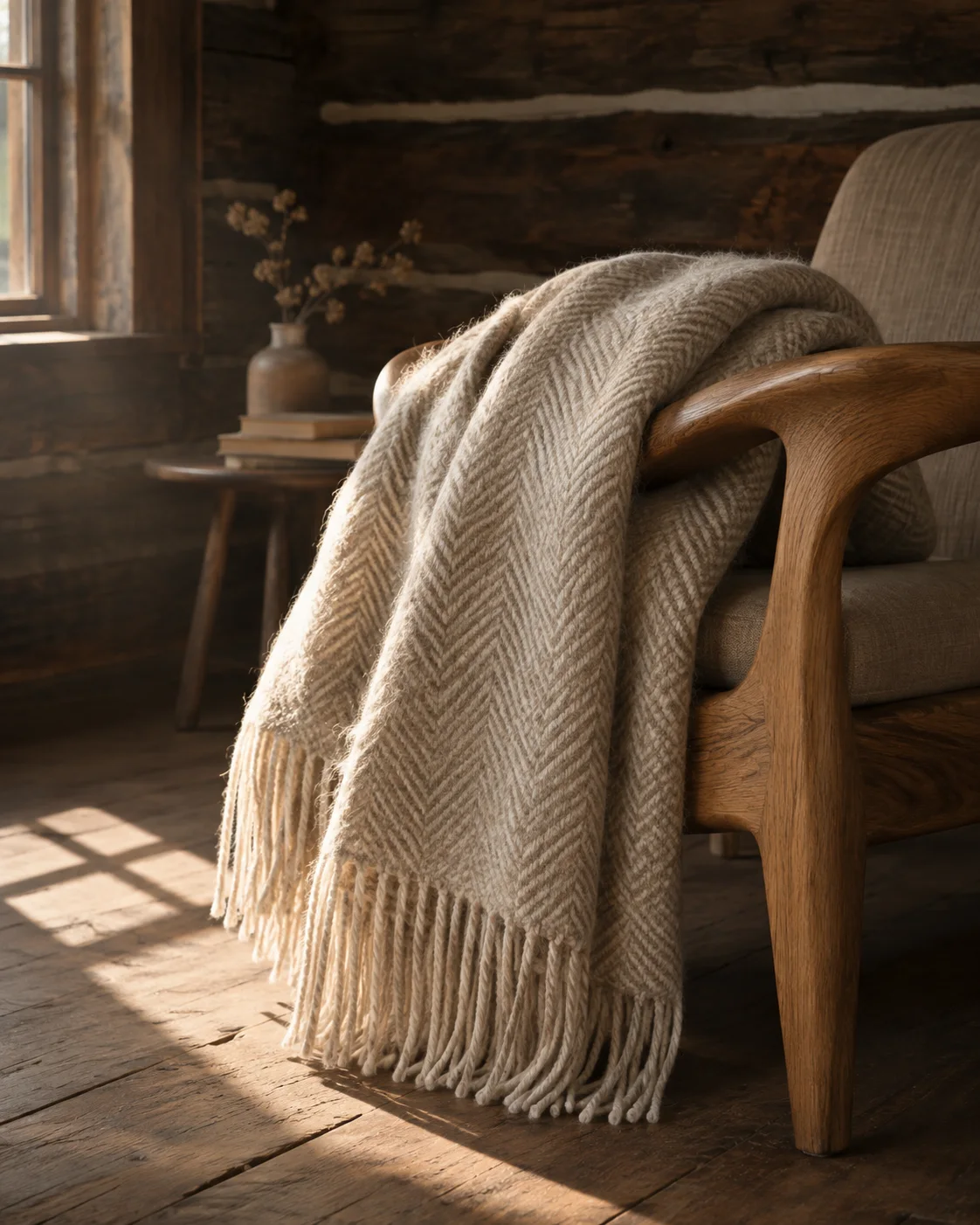
Sheep’s wool for blankets, felt and rugs. It keeps you warm even when damp and clears itself of smells: just hang it outside for a while.
- OatThe natural, undyed shade of fleece and linen.
- MossThe deep green of the forest floor, dyed in a plant bath.
- RustThe warm russet brown of autumn bracken.
- Where it comes from
- Yarn from sheep’s wool, undyed or plant-dyed. The felt for our baskets is 5 mm thick and holds its shape without any stiffening.
- How it ages
- It may shed a little in the first weeks, then it settles. Felt softens over time but keeps its shape.
- Care
- Usually an airing outdoors is all it needs. Blot stains straight away with cold water, and hand-wash the whole piece in cold water with wool detergent.
Stoneware
Mugs, jugs, lamps, vases
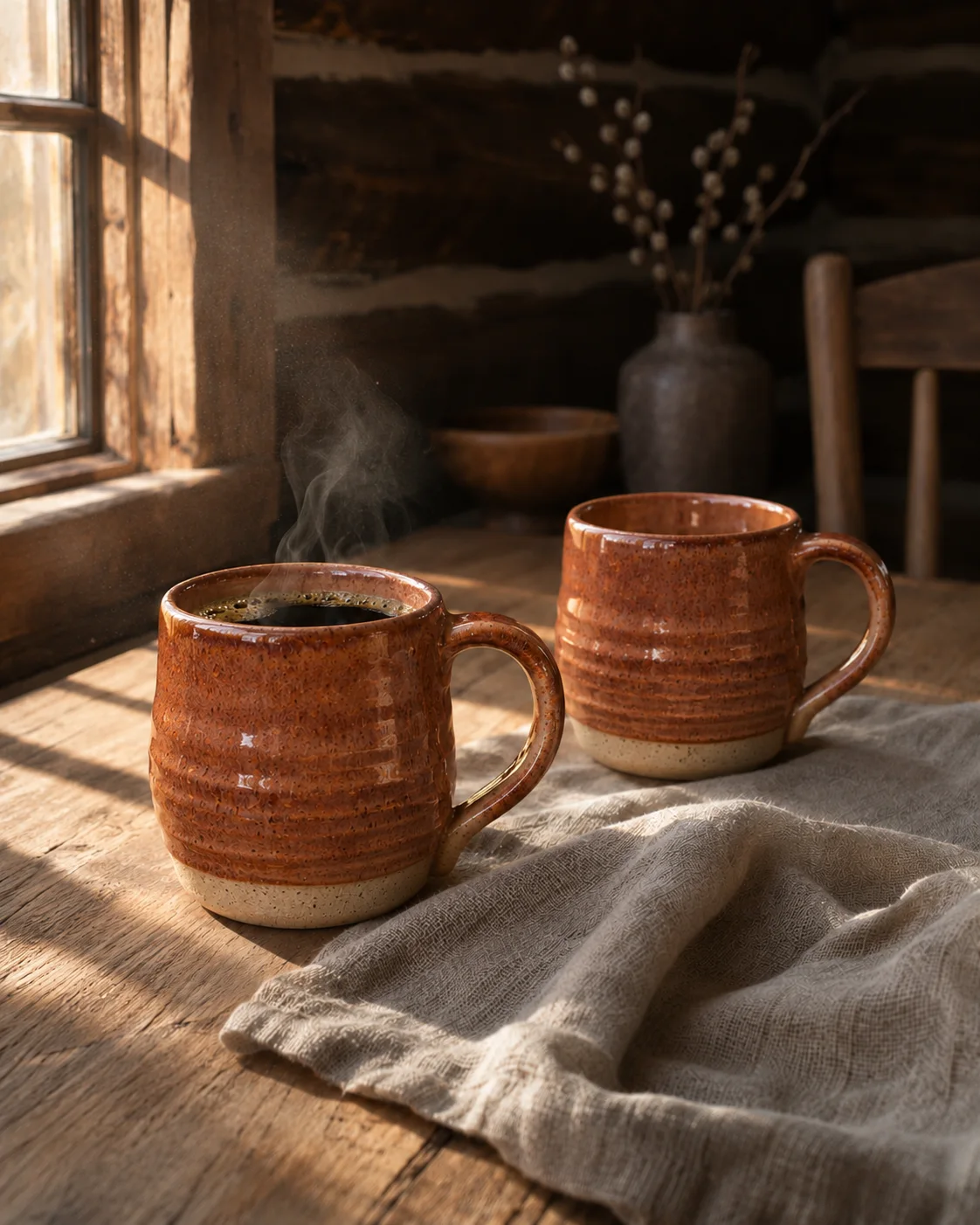
Clay fired at 1240°C, watertight and hard as stone. We throw it on the wheel, so no two mugs are the same.
- MossA muted green that turns to clay brown at the edges.
- ClayThe warm russet of fired terracotta, matt and soft to the touch.
- ChalkAn off-white with small iron flecks from the clay.
- Where it comes from
- Stoneware clay with fine grog and lead-free glazes mixed to our own recipes. Every batch is fired twice.
- How it ages
- Stoneware doesn’t age. Fine spoon marks may appear on the glaze; they wash off easily with a porcelain cleaner.
- Care
- Dishwasher and microwave safe. Don’t put a hot dish down on cold stone, or the sudden change in temperature may crack it.